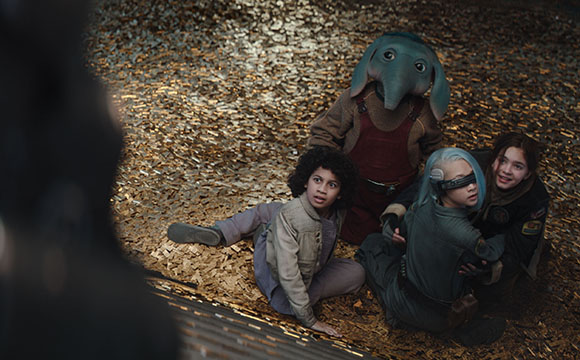
Star Wars: Skeleton Crew streams on Disney+ and follows the journey of four kids who make a mysterious discovery on their home planet. The children then get lost in a strange, dangerous galaxy and are forced to find their way home while coming across unlikely allies and enemies.
Chris McLaughlin is a visual effects supervisor at DNEG (www.dneg.com) and recently shared some insight into the studio’s contributions to the series, which debuted on December 2, 2024 and spans eight episodes.
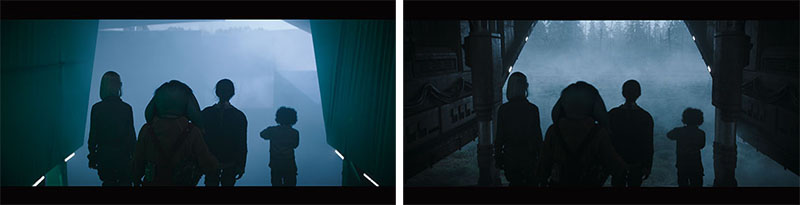
Chris, what was the creative brief for the show’s VFX needs?
“From the outset, the creative brief for Skeleton Crew was about capturing the distinct look and feel of Star Wars while ensuring that each sequence remained visually cohesive with the rest of the show. The production provided us with detailed concept art and previs models, which gave us a solid foundation for our environments and key assets.
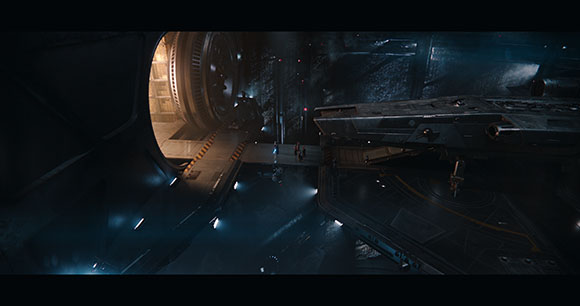
“Our role at DNEG was primarily focused on environment work, particularly in Episodes 4, 7 and 8. Whether it was the war-torn outskirts of At Achrann, or the massive industrial expanse of The Mint, our goal was to bring these locations to life while maintaining the cinematic scale and atmosphere that defines Star Wars.
“Overall VFX supervisor John Knoll and his team provided invaluable guidance throughout, helping us ensure our work aligned with the overall visual language of the series.”
How many shots did DNEG deliver, and which sequences was the studio responsible for?
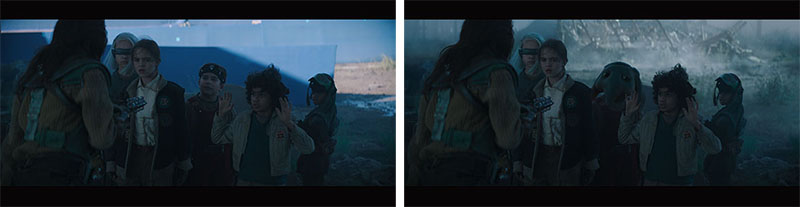
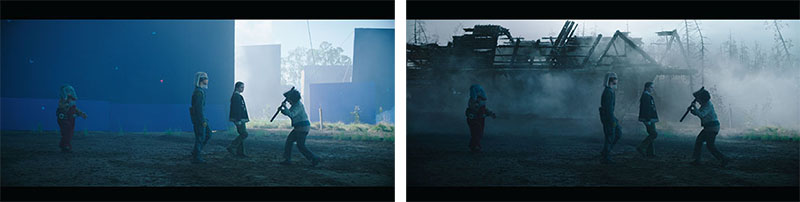
“DNEG delivered approximately 150 shots for the series. Our primary work was split across several sequences in two key environments: At Achrann in Episode 4, and The Mint in Episodes 7 and 8. For At Achrann, we created the CG environment for the war-ravaged suburban outskirts, including ruined buildings, rubble and a decaying forest. Our environment build for The Mint included the vast industrial complex hidden beneath At Attin, featuring the landing platform, the ‘Credit Maker,’ and the vault filled with endless stacks of credits.”
What were some of the challenges the team faced on some of the more complicated sequences??
“One of the biggest challenges we faced was ensuring the environments felt expansive and grounded while also serving the storytelling needs of each sequence.
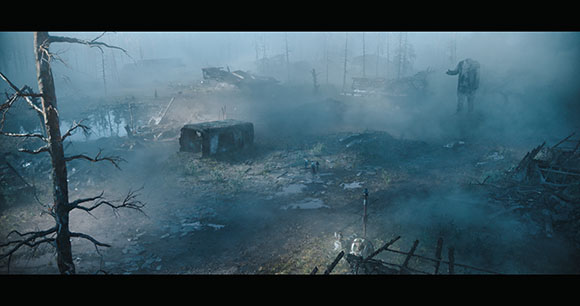
“For At Achrann, we needed to create an environment that felt truly devastated. While some key set pieces were built practically, most of the environment was CG. The challenge was populating the expansive backgrounds with enough variety in destruction while keeping everything cohesive. We built a library of ruined structures, debris and dead vegetation using real-world references from war-torn areas to inform the level of destruction. To enhance the atmosphere, we layered in rolling smoke and fog simulations, which helped to sell the scale and depth of the environment.
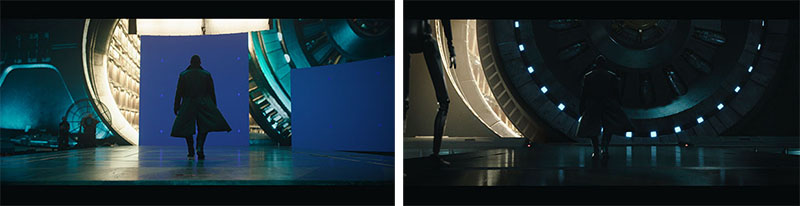
“For The Mint, the challenge was sheer scale. The concept art called for vast industrial machinery and cavernous vaults filled with credits. The ‘Credit Maker,’ in particular, had to feel immense, so we designed slow, deliberate animations for its moving parts to suggest a sense of weight and mass, and populated its surroundings with security droids to help establish scale in relation to human-sized characters.
“In both cases, lighting and atmosphere played a key role in tying the environments together. Our FX, lighting and compositing teams worked closely to ensure the integration between practical elements and CG felt seamless.”
What tools did DNEG rely on to complete the work?
“Our work on Skeleton Crew relied on a combination of industry-standard tools and proprietary Dneg technology. For modeling and texturing, we used Maya, ZBrush, and Substance Painter for asset creation. For lookdev and rendering, Clarisse and Arnold were used for rendering large-scale environments and ensuring realistic lighting integration. Our compositing team used Nuke for final integration, where we fine-tuned atmospheric effects, lighting and color grading. In FX and simulation, Houdini was critical for generating the dust, smoke and other atmospheric effects that helped bring scale and depth to our shots. Additionally, our internal pipeline tools helped manage large datasets and streamline collaboration across our VFX teams in Vancouver, Montreal and India.”