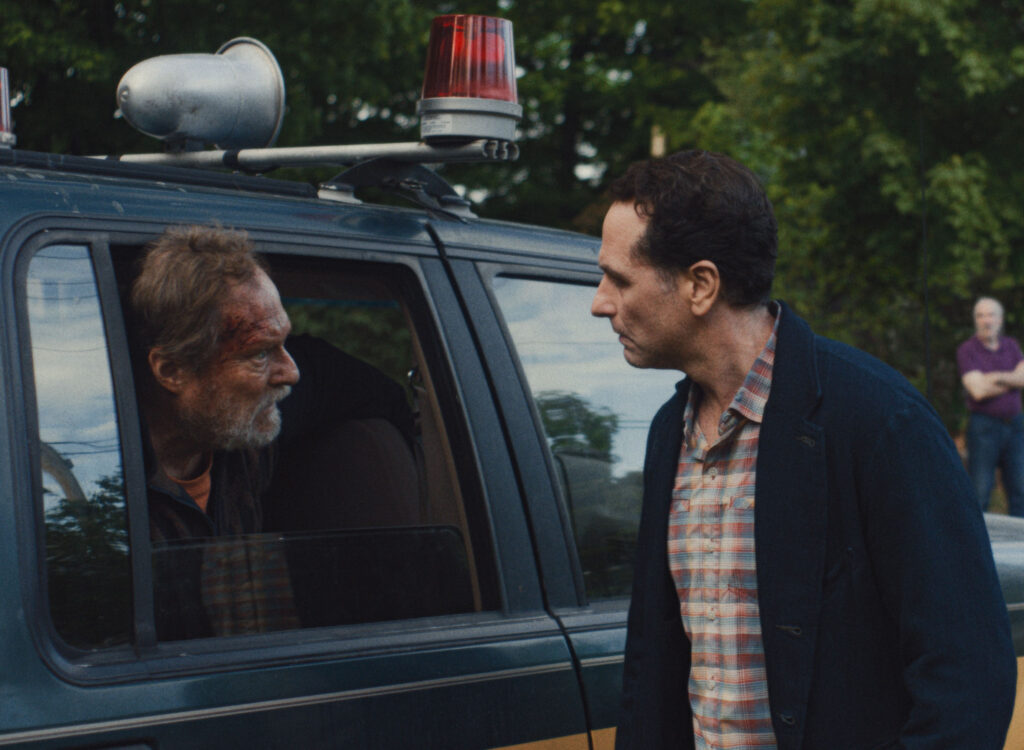
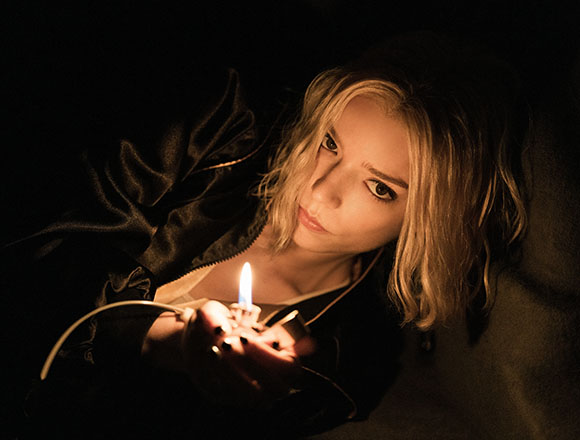
Lucky is one of Apple TV+’s newest thrillers and follows a reformed criminal, who is forced to confront her past and return to illicit activities. By completing one final job, she hopes to secure her freedom and leave her
former life behind for good. The drama is based on Marissa Stapley’s bestselling novel and stars Anya Taylor-Joy, along with Annette Bening, Timothy Olyphant and Aunjanue Ellis-Taylor. It spans seven episodes and began streaming in July.
For editor Aika Miyake, who won Emmy and ACE awards for her work on Shogun, Lucky marked her first experience cutting a thriller, though not the first time cutting complex female characters. Here, Aika shares details on how her past work and Japanese heritage shaped her approach to cutting Lucky, as well as the show’s unique challenges.
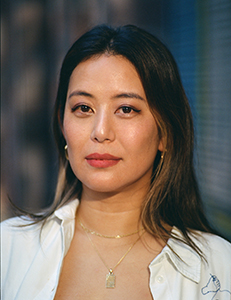
Aika, what was it that attracted you to the show, and how did you approach editing an action thriller?
“I was excited to cut a female-centered show for sure. Reading Lucky, Priscilla, and Agent Rand’s storylines in the script was thrilling. It’s a real joy to be able to edit strong female characters who have real layers underneath.
“I usually try to approach every new show like it’s the first thing I’ve ever cut, bringing in what I’ve learned from years of cutting short-form work without leaning on old habits. But I do find I lean on certain approaches for some scenes, using a Japanese concept called ‘Ma’ – space created through subtraction, removing what’s not essential so what remains carries more weight. It’s a rather simple way to reveal what’s bare and necessary at its core.
“Alongside that, I like what we call in Japanese ‘Kankyu,’ which is about tempo – knowing when to take your time and when to speed up. The scene where Lucky steals Sylvia’s truck is an obvious example, where we held the tension as much as possible while Agent Rand tries to locate Lucky. But with the sound of the engine, we bring up the energy, and that portion is cut very quickly. The less obvious scene is the opening, where the storage unit sequence is cut a little rough and fast on purpose. Overall, I really enjoyed cutting an action thriller.”

Tell us about your editing system and workflow.
“I cut on Avid, working remotely through Jump. My assistant editor, Jayda Cardoza, organized all the dailies. One thing that might be different from how some editors work is that I build one sequence per scene rather than working out of clip bins. All the material for a scene lives in one sequence, with a gap between each setup, so I can see the whole scene’s shape at a glance.
“I try not to over-trim a take too early. I’d rather leave detailed locators and notes, and make the cut decision once I understand what’s needed in that scene.”
Beyond your Avid editing system, what other tools did you rely on?
“Izotope RX 11 was really useful for cleaning up production sound. Must have!”
You previously worked on Shogun, editing another complex female character, Mariko, and you also had experience editing car commercials. Did that experience help you approach Lucky’s character or car chases, respectively?
“What struck me about both Mariko and Lucky is that they almost always have their guard up. You only see what’s really happening inside through small, hidden expressions. Lucky is carrying an inner conflict, almost an identity crisis, under enormous pressure. In the scenes where she’s working the girls, you can see her manipulating them to help her, but you can also feel that some part of her feels bad about it. Cutting that layered, contradictory emotion, where two true things are happening on a face at once, was one of the most fun challenges of the show, and it’s something I learned to really listen for while cutting Mariko.”
The production opted to shoot 35mm hand-cranked footage for flashbacks. What was that like from an editing experience?
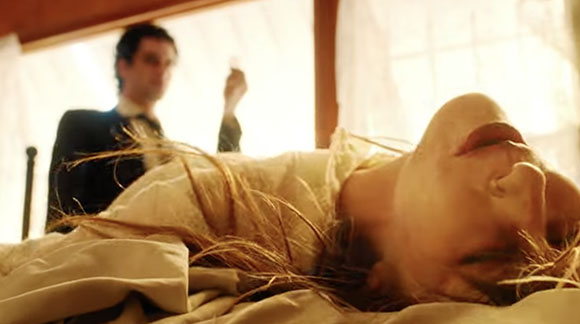
“Those flashback scenes were shot on an Arri 2C, a hand-crank camera. It’s real film, cranked entirely by hand, so the frame speed naturally varies. It gives the footage a vintage, almost unstable quality. You can also wind the film back and re-expose it, which creates a dreamy, almost unstable, psychological feel.
“I’m a Super 8 hobbyist myself, so getting to cut actual film footage was a real treat. We used it for a bathroom scene at the desert house, right after Lucky’s been betrayed by her husband, survived the fight with Priscilla, and been through the car incident in Episode 1. It’s the first quiet moment she gets to sit with everything. That instability in the film became the emotional texture of the memory itself. Lucky is trying to patch together what really happened to Carry, like she doesn’t want to believe the betrayal actually happened.”
Can you walk us through one of two challenging sequences or editorial highlights?
“The opening montage was one of my favorite things to cut. It’s Lucky and Carry finding the money, driving off, dancing in front of the car. It was shot on both digital and film, and it has that nostalgic feeling, like a good memory that stays with you. And then we contrast that happy, fuzzy feeling with later, where Lucky is lost in the desert, trying to survive.
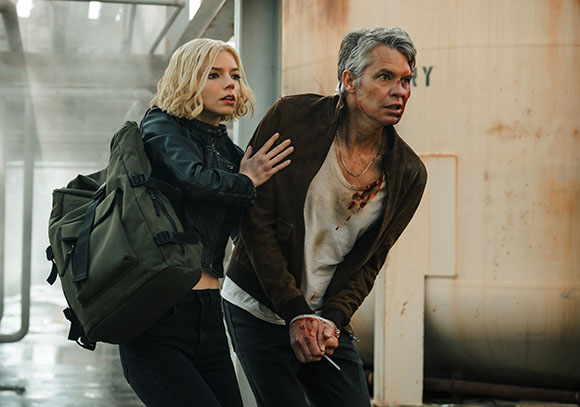
“One of the hardest scenes was Priscilla visiting John in prison. The performances are incredible, but it’s the first time we really see who these two are to each other and what’s at stake between them. They’re both working an angle to get information out of the other, so the tension has to stay high the whole time, while still leaving room for the tenderness they might have for each other.
“I remember Greg (Yaitanes), the director, suggested using a shot of Priscilla touching John’s face and saying she misses him. We only had one take of it, but once we cut it in, the whole scene clicked into place.”