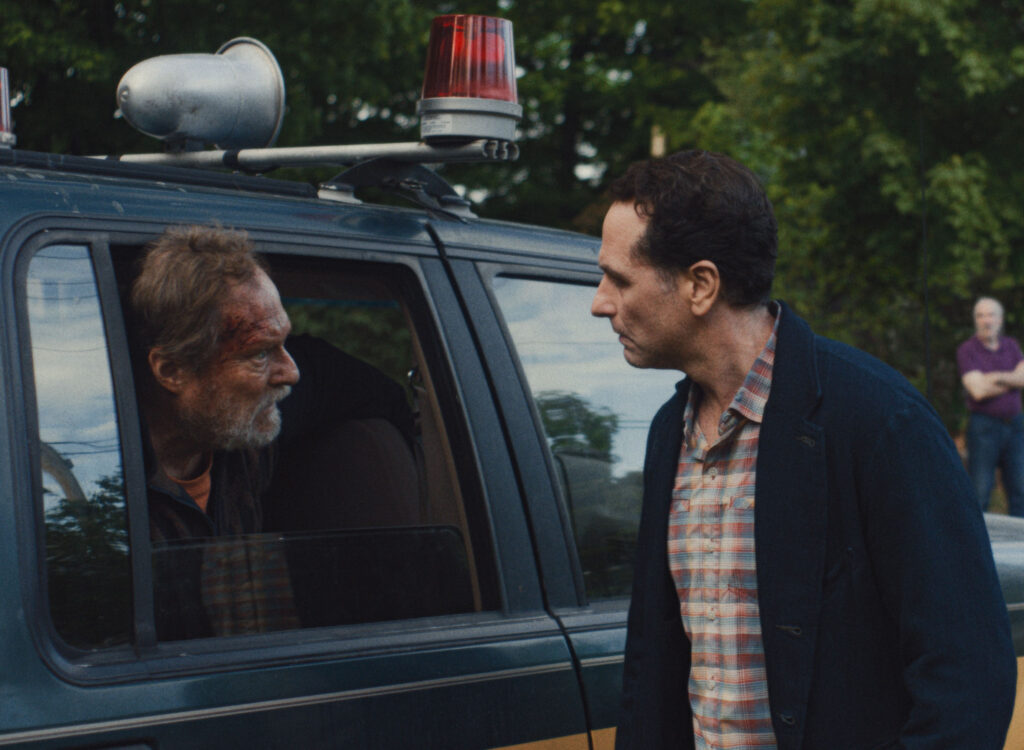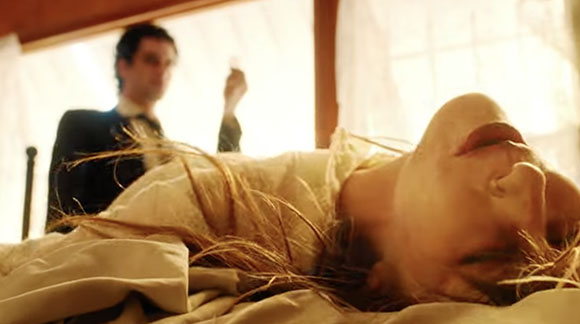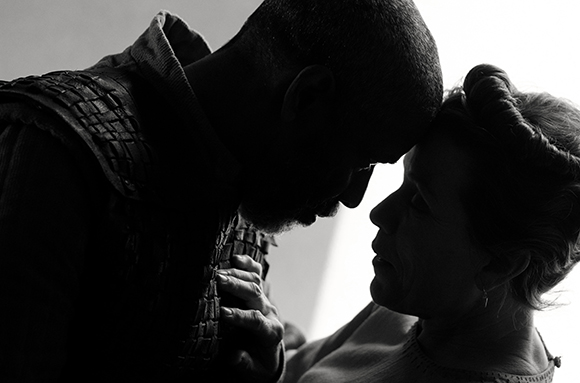
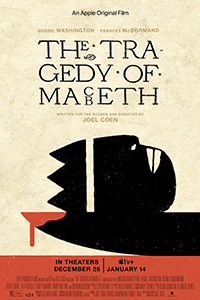
The film was produced by A24 and IAC Films, and is now streaming on Apple TV+. In addition to Washington, who was nominated for his performance by an Actor in a Leading Role, the film was also nominated for its Cinematography (Bruno Delbonnel) and Production Design.
Coen and co-editor Lucian Johnston were tasked with bringing this bold black & white adaptation to life. The team used Adobe Premiere Pro to piece the film’s rich scenes together and highlight the production’s poignant cinematography.
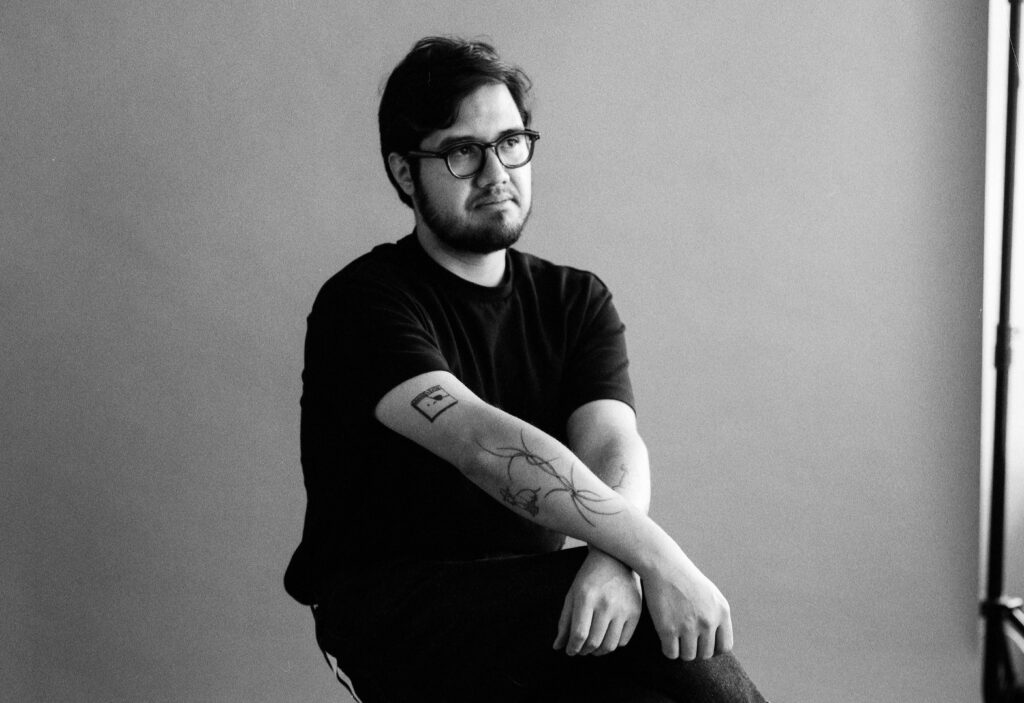
Johnston recently reflected on his career as an editor, and his collaboration with the veteran director.
Editing side by side – the power of mentorships
By Lucian Johnston
However, along with all of the advancements, came at least one devastating loss; the art of apprenticeship. The assistant editors of the Steenbeck era got a front row seat to the art and craft of editing. The physical, tactile process of cutting film mandated the close proximity of an assistant at the bench, and this facilitated a passing down of craft.
Now, editors and assistant editors work in separate rooms, behind closed doors. The assistant editor’s job is largely a technical one, and the apprenticeship process that was once an automatic byproduct of the job is now in many cases not even part of it. The act of teaching is now a pro-active one, made possible only by an editor’s own personal dedication to tutelage, which can understandably be very difficult to fit in to the day’s schedule.
In 2017, I was fortunate to be hired as an assistant editor on Joel and Ethan Coen’s The Ballad of Buster Scruggs. I had worked with their post supervisor Catherine Farrell as an AE on a few projects, and she thought I’d be a good fit for them. My duties on Buster were largely traditional AE duties but Joel wanted to work a little bit on the weekends, and I volunteered to do that with him. Over the course of the following months, Joel and I would cut one on one together most Saturdays and Sundays. He would sit at the computer, editing, and I would sit directly next to him at his side, watching every single cut, helping with various technical things when called upon. Up to this point, I had been lucky as an AE, getting the chance to work with great editors and learning a lot in turn, but not once on any previous job did I actually get to sit at the desk with an editor while they worked. For me, it was a transformative learning experience; a true apprenticeship, the likes of which I then realized was quite rare in the post production world.
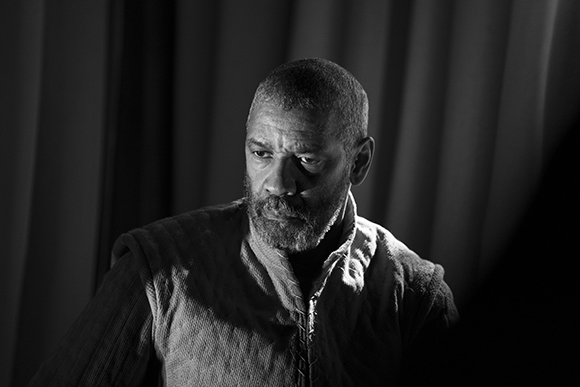
After Buster, I went on to edit a few feature films, relying on a lot of the revelations I had learned at the desk with Joel. In early 2021, Joel called me and asked if I wanted to co-edit The Tragedy of Macbeth with him. Ethan was taking a break, and he needed someone to work through the material with.
In many ways, working on TTOM was not entirely unlike working on Buster Scruggs. Joel and I would sit together at a computer, each with our own monitors, keyboard, and mouses, and we pieced the film together edit by edit, talking about every single cut along the way. Our workflow was pretty simple. We used Adobe Premiere Pro, which Joel prefers because of how intuitive it is. As is the case on every feature film, I cut an assembly of the film during production, but since since Joel was used to editing his own films, he was adamant about not screening the assembly after the shoot wrapped.
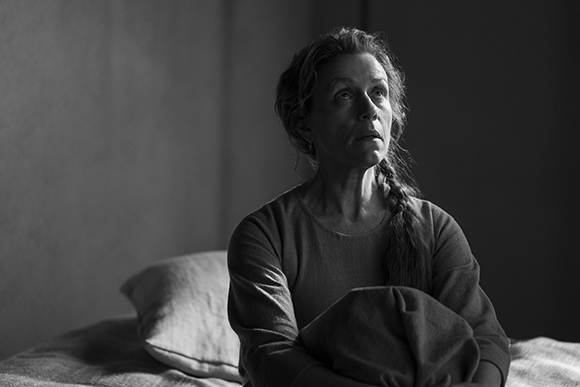
When Joel did arrive for post, our assistant editor Max Berger prepared screening sequences and corresponding editor notes. We worked in chronological order. We would start the day by watching all of the dailies for a given scene and taking notes. Then, we would begin assembling the scene together shot by shot, cut by cut, talking about every edit along the way. We were approaching scenes from opposite angles. Joel was starting from scratch, and I had already cut every scene, so I was reverse engineering my own edit in my head as we we worked through it together. When we finished a scene, we would take a look at the version I had originally assembled and if there was anything still worthy of inclusion in my initial construction, we would combine my original cut with the new cut. So as we worked through our first pass of the film, it was really like 3 passes: my original assembly, Joel’s assembly, and then our combo cut. This resulted in a very polished 1st cut of the film. Our first pass was an 1hour and 45 minutes. The final cut was 1hr and 41 minutes, and other than the fine cutting we did on our subsequent passes, the foundation of the film was very much largely in place after our first collective pass through the film.
For me, the process was once again a fascinating learning experience. The unique challenges of cutting a Shakespeare film are innumerable and deserve their own essay. We of course paid particular attention to language. We used line swaps to track and augment performance, which is something that all editors do, but the level of precision with which we utilized them on Macbeth was completely new to me. We did entire syllable passes of the film, replacing letters of words in certain lines to make sure they were hitting the way they needed to. We employed every split screen and fluid morph trick in the book to pace the film up and make it move as quickly as possible. We constantly calibrated and re-calibrated the tone of certain sections, and we worked closely with an expert team of collaborators every step of the way to bring Joel’s vision to life. At least once a week, we conducted remote meetings with Alex Lemke and Michael Huber (VFX) , Stefan Dechant (production designer), and Bruno Delbonnel (DP), to ensure that the VFX and distinct visual language of the film were developed congruously. Adobe was especially helpful too, and we were in constant communication with them throughout the process to make sure we had everything we needed to finish the film.
Throughout the experience, it became more and more clear to me that the learning process as an editor is never ending. Working with Joel has been a great honor and privilege, and I feel unbelievably lucky for his mentorship. Right now, our industry is undergoing the biggest seismic shift since the digital workflow in the transition to remote workflows. The benefits of remote working, mainly to our personal lives and mental health, cannot be overstated. However, I hope that as remote and hybrid workflows become more and more the norm in post production (and anyone who wants to work remotely should be given permission to do so), traditional apprenticeship doesn’t continue to die out. If digital workflows were the first nail in the coffin of apprenticeship, then I hope remote workflows don’t prove to be the death blow. I know how instrumental classic, in-person mentorship has been to me as an editor, and I try to pass that down to my own assistants as much as possible.